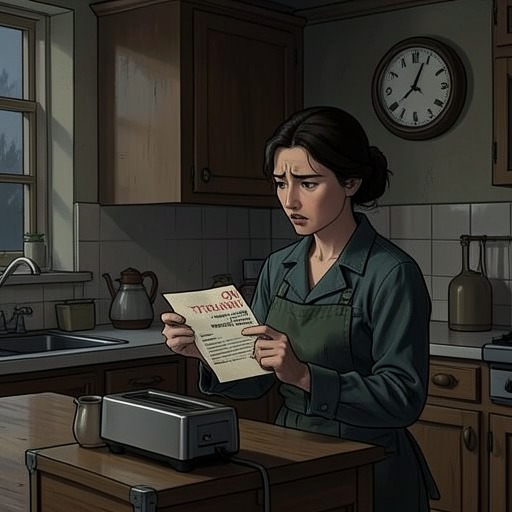
Roth’s decision to withhold Elizabeth’s private story
Lessons in ChemistryRoth’s decision to withhold Elizabeth Zott’s private story turns a journalist’s access to intimate knowledge into a test of what he will publish. After hearing Elizabeth blame herself for Calvin Evans’s death and trace its consequences through her life, Roth chooses to protect her confidence. His article will describe her work and the ideas carried by Supper at Six, but it will not expose the confession that might have supplied the personal scandal his editor demands.
The Confession Behind the Decision
Elizabeth tells Roth that she considers herself entirely responsible for Calvin’s death. She recounts the accident, the leash, and the sirens; Roth pales as he listens. The details make clear that his later silence is not the result of having failed to discover anything. He has been given an account she regards as central to her grief, and he recognizes its weight before deciding what to do with it.
She also describes the failures that, in her view, followed Calvin’s death. Blindsided by Dr. Donatti’s theft of her research, she gave up her work. Wanting to help her daughter fit in, she enrolled her in a school where she did not fit in. She believes she became the person she least wanted to be: a performer like her father. She even includes Phil Lebensmal’s heart attack in this reckoning, though she pointedly does not regard that outcome as a failure. Her account is therefore more than a disclosure of one tragedy: it is a private explanation of how grief has shaped her judgments about her career, her parenting, and the person she has become.
A Deliberate Refusal to Disclose
Roth’s decision is made before he gets into a cab. On the way to the airport, the photographer asks whether anything important happened in the room. Roth says no. The lie is brief, but it marks the difference between possessing Elizabeth’s story and handing it on. Rather than treat her candor as material simply because it is available to him, he resolves not to reveal what he has learned.
He frames the choice as a professional plan: write to specification, meet the deadline, and keep the article within its assigned length. He intends to write extensively while saying nothing about Elizabeth’s private account—to write about her without reporting her secrets. The distinction is not between a truthful article and a false one; it is between covering Elizabeth’s public work and exposing the vulnerable explanation she has entrusted to him. His restraint protects the boundary between a profile and an act of disclosure.
The Article He Writes Instead
On the plane, Roth begins with the public meaning of Supper at Six. He describes the program not merely as an introduction to chemistry but as a recurring lesson in what people might become. That emphasis gives him a way to write about Elizabeth without making her confession the article’s organizing story: the subject can be her work and its larger possibilities, rather than the private suffering behind it.
In place of personal information, he writes two thousand words on abiogenesis and follows them with five hundred words on how elephants metabolize food. The scale and specificity of those sections matter. Roth does not simply leave the page blank or abandon the assignment; he fills it with scientific subjects, redirecting the article toward knowledge rather than intimate revelation. The result is substantial copy that withholds precisely the material the editor is likely to consider most sensational.
The Editor’s Demand and Roth’s Answer
The decision becomes explicit when Roth’s new editor reads the draft and demands the dirt on Elizabeth. Roth answers that there is none. The claim is pointed because the reader has just witnessed how much he knows: Elizabeth has told him about Calvin’s death, her self-blame, and the setbacks she connects to that loss. In context, Roth’s answer does not mean that her life contains no painful or publishable details. It means he will not convert what she told him into the kind of exposure the editor is requesting.
The episode places the article’s subject and its omissions side by side. Roth can meet his deadline and produce a piece about Elizabeth while leaving her private account outside it. His refusal does not erase the confession from the narrative; readers learn what he chooses not to print. Instead, the contrast makes his editorial restraint visible: the story shows both the appeal of personal revelation and the choice not to use it as journalistic currency.